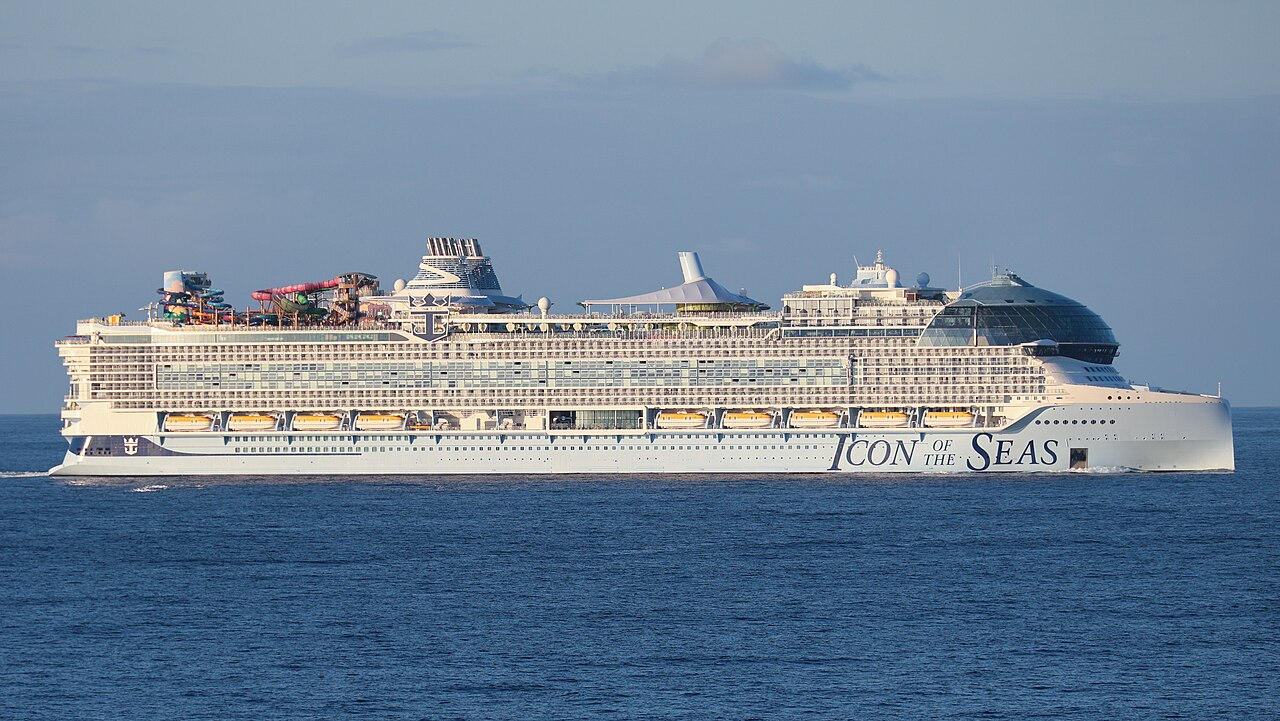
Icon of the Seas Decks Explained: 19 Total, 18 for Guests
As the world’s largest cruise ship, Royal Caribbean International’s Icon of the Seas is a floating metropolis designed to redefine the vacation experience. With its sheer size and an unparalleled array of amenities, one of the first questions many eager cruisers ask is: Icon Of The Seas How Many Decks? The answer, while seemingly simple, involves a fascinating look into the engineering and design of this magnificent vessel. Officially, the Icon of the Seas boasts 19 total decks, with 18 of them thoughtfully designed and accessible for guests to explore, relax, and discover adventure. This distinction between total decks and guest-accessible decks is crucial to understanding the true scale and functionality of this maritime marvel.
Launched in 2024, the Icon of the Seas is the flagship of Royal Caribbean’s groundbreaking Icon Class, sharing its immense proportions with future sister ships like the Star of the Seas. With an internal volume reaching an astounding 250,800 gross tons (GRT), a capacity for up to 7,293 passengers at maximum occupancy (or approximately 5,600 at double occupancy), and a dedicated crew of 2,350, every inch of its structure is optimized for an extraordinary journey. Its 2,805 staterooms spread across 11 dedicated cabin decks offer an incredible variety of accommodation options, ensuring comfort for every type of traveler.
Beyond the Numbers: Unpacking the Deck Count
The headline number, "19 decks," often sparks curiosity, but it's important to differentiate between the ship's total structural levels and those intended for passenger use. While there are indeed 19 physical decks, 18 are open to guests, presenting a vast landscape of exploration. The remaining deck is primarily dedicated to the ship's extensive operational infrastructure, crew facilities, and essential mechanical areas—spaces crucial for the smooth functioning of a vessel this size but not part of the passenger experience.
One common observation when reviewing cruise ship deck plans, including those for the Icon of the Seas, is the non-sequential numbering. You might notice the deck plans jumping from Deck 12 to Deck 14, or even extending to Deck 20 despite the ship having only 19 total decks. This isn't an error; it's a deliberate design choice, often rooted in maritime tradition and superstition. The most famous example is the widespread practice of skipping Deck 13, believed by some to be unlucky. While the Icon of the Seas plans technically go up to Deck 20 in some diagrams, this reflects architectural designations, with the effective number of physical decks being 19. Understanding these nuances helps in fully appreciating the ship's layout and planning your on-board exploration.
It's also essential to remember that a ship's height, or deck count, isn't the sole determinant of its overall size. While the Icon of the Seas certainly towers over the water, true ship size is measured by factors like gross tonnage (GRT), which reflects internal volume, as well as its length and width (beam). These metrics provide a more accurate picture of the space available to passengers and the ship's overall capacity. The Icon of the Seas' 250,800 GRT underscores its status as the world’s largest, offering a spaciousness that goes far beyond just its vertical reach.
A Deep Dive into Guest-Accessible Decks and Amenities
With 18 decks at your disposal, the Icon of the Seas is designed to offer an unparalleled diversity of experiences across its various levels. Among these, 11 decks are dedicated to staterooms, ensuring guests have a wide array of choices from interior cabins to expansive suites with ocean views or balconies overlooking vibrant neighborhoods like Central Park or the AquaDome. This thoughtful distribution of accommodations helps to disperse guests and create a more intimate atmosphere despite the ship's grand scale.
The remaining guest-accessible decks are a vibrant tapestry of entertainment, dining, and relaxation. From the thrilling adventures of Thrill Island and the family-focused fun of Surfside, to the tranquil retreats of the adults-only Cloud 17, each deck presents a new discovery. You'll find a dynamic blend of signature Royal Caribbean favorites and groundbreaking new concepts spread strategically across these levels, creating distinct neighborhoods:
- Lower Decks: Often home to essential services like Guest Services, medical facilities, and the main dining rooms, ensuring easy access.
- Mid-Level Decks: These are typically the heart of the ship, bustling with activity. Here, you might find the Royal Promenade, casinos, shops, bars, and specialty restaurants.
- Upper Decks: These levels are where much of the outdoor action happens. Think expansive pool decks, the AquaDome, FlowRider surf simulators, rock-climbing walls, and dedicated sports zones. Many of these upper decks are designed to maximize views and open-air enjoyment, contributing significantly to the ship's impressive height without always adding to internal volume.
The strategic layout of these decks ensures that whether you’re seeking high-octane thrills, gourmet dining, or a quiet corner to read, your desires are always within reach. For a comprehensive overview, guests should definitely consult the official Icon of the Seas deck plans, which provide detailed layouts of public venues and cabin types on each of the 18 accessible decks.
Navigating Your Way: Tips for Making the Most of Icon's Decks
Exploring a ship as vast as the Icon of the Seas is an adventure in itself. Here are some practical tips to help you navigate its 18 guest-accessible decks like a seasoned cruiser:
- Study the Deck Plans: Before you even embark, take some time to familiarize yourself with the ship's layout. The Royal Caribbean website and app provide detailed interactive deck plans that highlight key venues and your cabin's location.
- Utilize the Royal Caribbean App: The Royal Caribbean app is your best friend onboard. It often includes interactive maps, wayfinding features, and daily schedules, making it easy to see what's happening on which deck.
- Locate Your Cabin Strategically: When booking, consider your proximity to preferred amenities. Do you want to be near the pool deck, or would you prefer a quieter deck close to the main dining room? Reviewing deck plans can inform your cabin choice.
- Use Elevators AND Stairs: While there are plenty of elevators, don't underestimate the power of the stairs for moving between a few decks. It’s often quicker and a good way to get some exercise, especially during peak times.
- Look for Signage: Royal Caribbean ships are well-signed, with clear indicators for deck numbers and directions to major venues. Pay attention to these signs, especially in central areas like the Royal Promenade.
- Identify Forward, Aft, and Midship: Knowing where you are relative to the front (forward), back (aft), and middle (midship) of the ship will greatly aid your navigation.
The sheer scale of the Icon of the Seas means that exploring all its nooks and crannies will take time. Embrace the journey of discovery, and don't be afraid to get a little "lost" – you might just stumble upon your new favorite spot!
The Science of Size: Why Gross Tonnage Matters More Than Deck Count
While the number of decks offers an impressive visual, industry experts and seasoned cruisers often emphasize gross tonnage (GRT) as the most accurate measure of a cruise ship's size. GRT isn't a measure of weight but rather the ship's total internal volume. For the Icon of the Seas, its 250,800 GRT signifies an immense amount of enclosed space dedicated to passengers, crew, and operations.
This internal volume directly translates to the spaciousness you'll experience onboard. A higher GRT allows for wider corridors, larger public venues, more diverse dining options, and a greater variety of amenities, all contributing to a more comfortable and less crowded feeling for passengers. Alongside GRT, the ship's length and beam (width) play crucial roles in how "big" a ship truly feels and how stable it is at sea. The innovative internal design of Icon of the Seas maximizes every cubic foot, ensuring that its vastness feels inviting rather than overwhelming. So, while the 19 decks (18 for guests) are a remarkable feat, it's the colossal GRT that truly cements Icon of the Seas's status as the world's largest cruise ship and a benchmark in modern maritime engineering.
Conclusion
The Icon of the Seas is more than just a cruise ship; it's a testament to innovation and luxury on the high seas. When considering Icon Of The Seas How Many Decks, understanding the distinction between its 19 total decks and the 18 incredible guest-accessible levels unlocks a deeper appreciation for its thoughtful design. From the 11 decks brimming with diverse staterooms to the multitude of entertainment, dining, and relaxation zones spread across its vertical landscape, every deck has a purpose in crafting an unforgettable vacation. By focusing on its impressive gross tonnage and intelligently navigating its meticulously planned spaces, guests are set for an unparalleled adventure aboard Royal Caribbean's latest and greatest masterpiece.